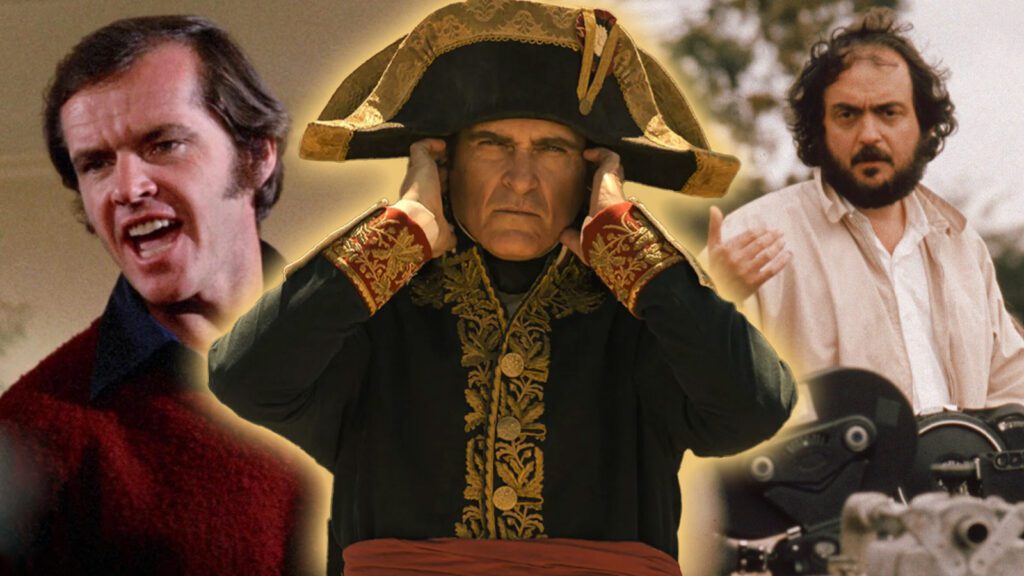

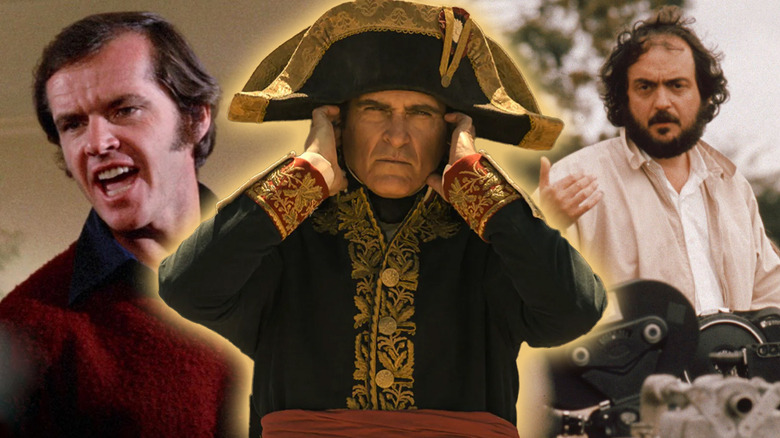
Stanley Kubrick’s Napoleon May Truly Be The Greatest Movie Never Made
 Static Media
 Stanley Kubrick had been dreaming of a Napoleon Bonaparte biopic long before he acquired the clout to make it. All it took to get investors on the hook was the massive global success of “2001: A Space Odyssey.”
However, after Kubrick had just launched moviegoers into the cosmos and beyond, his return to the project – which bore the working title “Napoleon” — struck some as awfully quaint. Historical epics could obviously be transporting in their own right, but they lacked the snap of the new. Viewers wanted another head trip, not a cradle-to-the-grave journey through the life of the former French Emperor and military genius. Perhaps if they’d been privy to the proposal Kubrick wrote prior to plunging into production, audiences would’ve been properly stoked. With nary a hint of humor, Kubrick put the following sentence down to paper: “It’s impossible to tell you what I’m going to do except to say that I expect to make the best movie ever made.”
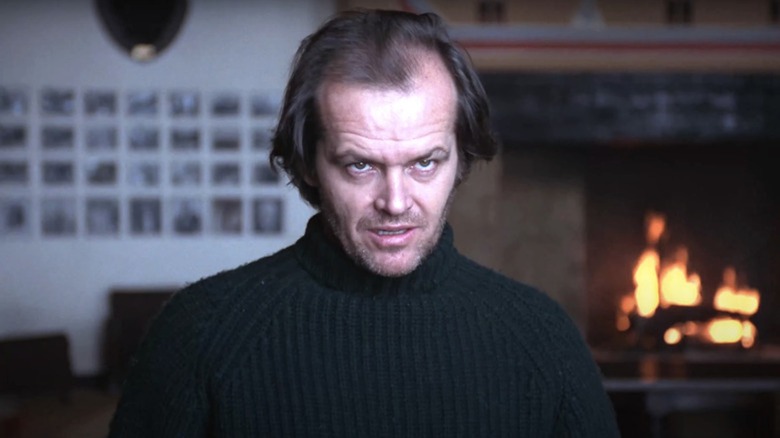
After “2001: A Space Odyssey,” this didn’t smack of hubris. If any filmmaker active during that era could deliver on such an audacious promise, it was Kubrick. And he had the perfect actor picked out for the lead role: Jack Nicholson.
So how, in the wake of a wildly profitable cinematic phenomenon, with an A-list actor at the top of the marquee, did Stanley Kubrick’s epic “Napoleon” fail to come to fruition? You’ve likely already guessed the answer. What you might not know is that Kubrick’s meticulous planning has been made available for the public to see, and, once you see what he was cooking up, you’ll lament the premature death of what really, truly could’ve been the best movie ever made.
Kubrick’s Napoleon would’ve been a meticulously researched portrait
 Screen Archives/Getty Images
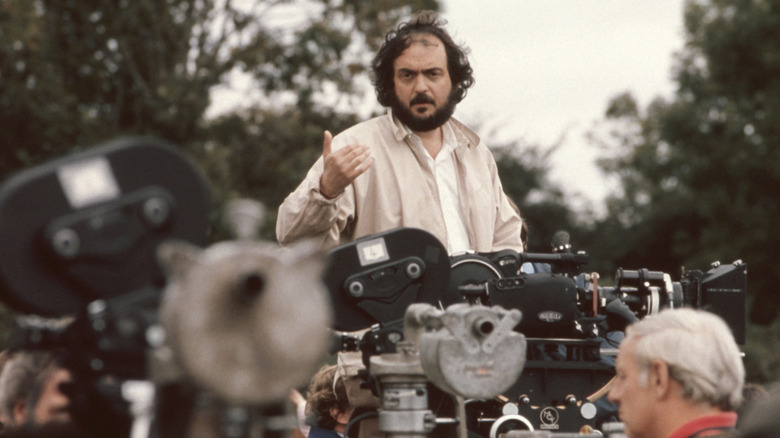
 Kubrick approached “Napoleon” as if he were mounting a full-scale military invasion. He hired dozens of research assistants and consulted with prominent professors to help him reassemble le petit caporal on a near-genetic level. He inhaled 278 books and thousands of scholarly papers to understand not just the man, but the conflict-laden times in which he thrived (until he didn’t).
For Kubrick, the primary appeal of studying Bonaparte’s life was to understand how a master of his craft — a meticulous planner, military genius, and born leader — could spin apart because, to be frank, he couldn’t keep it in his pants. He would return to this theme (in miniature) with “Eyes Wide Shut.” But the stakes in “Napoleon” are quite different. Bonaparte was on the verge of establishing an empire. He was unmatched in tactical thinking. The future of Europe, and the world, were his to control.
In preparation for writing the screenplay, Kubrick had his assistants compile 25,000 index cards that charted the arcs and motivations for every relevant character who passed through Bonaparte’s life (the filmmaker even went so far as to create cards for his subject’s day-to-day life). Kubrick was strategizing, figuring out how and when to deploy his characters as he hit the crucial beats of the diminutive emperor’s 51 years. He also drew up schematics for massive battle sequences that would’ve involved thousands of extras. The more Kubrick researched, the pricier the production got. He knew this, and proposed utilizing cost-cutting measures that he’d use on his subsequent films.
Kubrick’s screenplay was a culmination of exhaustive research
 Warner Bros.
 According to Kubrick’s brother-in-law Jan Harlan, “Pre-production and editing were Kubrick’s joy — filming itself a necessity.”
The director went to extraordinary lengths while prepping “Napoleon.” Aside from the exhaustive reading and index carding, Kubrick adopted some of Bonaparte’s actual physical habits. Malcolm McDowell noticed this while dining with his “A Clockwork Orange” director. As the actor told The Guardian, “It was a takeout of Chinese food, and I noticed he’d eat the stewed pears then take a bit of hot and sour chicken. I said: ‘Why are you mixing all this up?’ He looked at me and said: ‘Napoleon did.'”
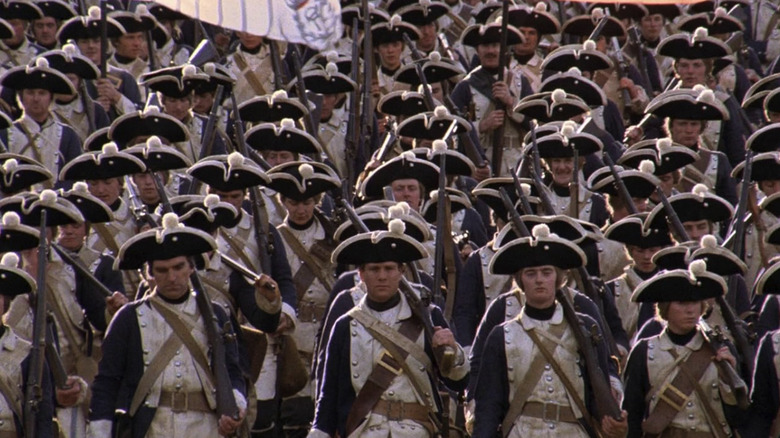
Eventually, all of this research would allow him to confidently write a condensed, 148-page screenplay that would capture the life and times and soul of the man. The September 29, 1969 draft is available online (having been discovered in a Kansas salt mine in 1994), and it’s an engrossing read that skips from one crucial moment to another without becoming the “Walk Hard” version of Bonaparte’s rise and fall. What it is not, however, is definitive. “Stanley’s scripts were often very different from the final film,” said Harlan.
All of Napoleon’s military triumphs are depicted in piercing detail, and his sexual exploits are explored as well. However, the script — while enthralling — is frigid at its core. And this is because all of the brilliant filmmaking skills at Kubrick’s disposal — his unerring camera placement, his elegant mise-en-scène, his ineffably perfect sense of how long to let a scene play — are nowhere in evidence. These are the bones of a psychologically complex biopic. The meat of the movie would be provided by the director’s aforementioned genius and the man he would cast as Bonaparte.
Kubrick cast Jack Nicholson as his Napoleon
 Warner Bros.
 One year prior to writing the screenplay, Kubrick assembled seven pages of production notes wherein he explained how the budget for “Napoleon” could be kept under control (you can read them here). One element he zeroed in on was casting. “I think sufficient proof must now exist that overpriced movie stars do little besides leaving an insufficient amount of money to make the film properly, or cause an unnecessarily high picture cost,” he wrote. He cited a Variety study showing that top stars’ salaries weren’t even being recouped in the overall gross.
Kubrick had this in mind early on when he identified up-and-coming actor David Hemmings (hot off of Michelangelo Antonioni’s “Blow-Up”) as the potential lead for “Napoleon.” However, Kubrick would ultimately go for a buzzier name in Jack Nicholson, who’d received a Best Supporting Actor nomination for “Easy Rider” and was on the cusp of earning a Best Actor nod for “Five Easy Pieces.” He offered the part of Joséphine to Audrey Hepburn, but she declined. In a later memo, Kubrick wrote, “No other big stars would be envisioned. I suggest actors of the ipecacable [sic] calibre of Ptarick [sic] Magee… and others are readily available at reasonable non-star deals.” (The director’s famous meticulousness did not extend to his missives.)
Kubrick predicted further savings by shooting in Romania, where the government would supply them with “30,000 troops at $2 per man.” Understandably, the Eastern European country was eager to host a blockbuster epic from the man who staged a bone-to-spaceship miracle with “2001: A Space Odyssey.”
But let’s pump the brakes here and acknowledge the scale of this undertaking. 30,000 troops? Kubrick allowed that they’d only need 15,000 on any given day, but that’s still an absurd amount of human labor dedicated toward the recreation of historic battles. Still, Kubrick might’ve gotten away with it … had Sergei Bondarchuk been a better filmmaker.
How Kubrick’s Napoleon met its Waterloo
 De Laurentiis Entertainment Group
 In the mid-1960s, Russian director Sergei Bondarchuk was charged with mounting the ultimate, spare-no-expense motion picture adaptation of Leo Tolstoy’s “War and Peace” as a point of Soviet national pride. He delivered a mega-budget spectacle that, divided into four parts, ran a total of 415 minutes. Bondarchuk had tens of thousands of troops and horses at his disposal, and a keen attention to production and costume design that brought history to life. It’s an exhausting picture, but it is rousing at times. For sheer cinematic chutzpah, it’s hard to beat.
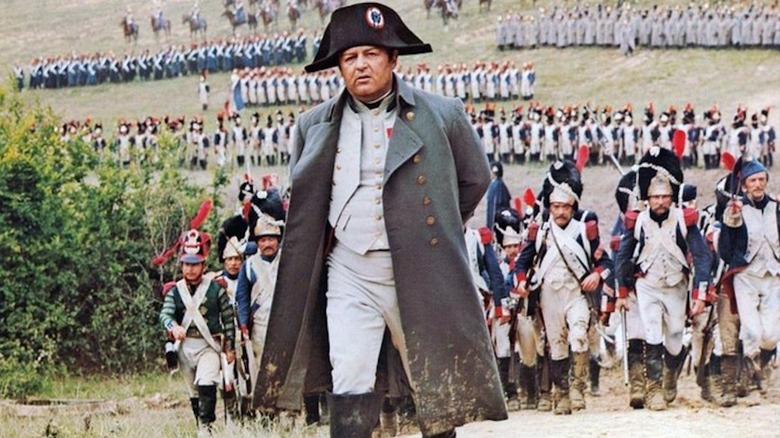
Enter Dino De Laurentiis, who knew a thing or two about chutzpah. The Italian producer had been trying to make a film about the battle of Waterloo for several years, and, after negotiating with the Soviets, secured the services of Bondarchuk. Armed with a $25 million budget, the Russian director marshalled his filmmaking forces and, basically, Waterlooed himself. Released in 1970, “Waterloo” was a critical and commercial flop featuring what-the-hell-am-I-doing-here performances from Rod Steiger, Christopher Plummer, Orson Welles, and Virginia McKenna. Bondarchuk understood Napoleon as a historical figure in “War and Peace,” but had scarce insight into the man in “Waterloo.”
“Waterloo” bombed at the precise moment that studios were avoiding pricy, old-school historical epics. Stanley Kubrick might’ve been the master of the filmmaking universe after “2001: A Space Odyssey,” but the similarity between his project and Bondarchuk’s was just too much. And that’s how Kubrick’s “Napoleon” took one right between the eyes.
No one was more heartbroken over Napoleon’s collapse than Jack Nicholson
 Apple
Apple Kubrick had a contract with MGM, but the agreement only covered pre-production. They had no obligation to finance the film. In 1971, Kubrick was still trying to make the film with joint financing from MGM and United Artists, but the stink of “Waterloo” was still wafting through Hollywood. Even with Kubrick’s cost-saving proposals, no studio would touch “Napoleon.”
This was quite the blow for Jack Nicholson, who formed his own deep obsession with the emperor, going so far as to option a book, “The Murder of Napoleon,” which he hoped Kubrick would direct. “‘I’ve invested a lot in the subject,” Nicholson told The New York Times. “I sort of look at it like Shaw, Nietzsche, those kind of thinkers did, who consider Napoleon the man. When I was thinking about him, I got a feeling of autobiography about it — again, in terms of poetics — in the sense that he was a man who conquered the world twice. And became a symbol for the Devil. That’s the way they described him in England.”
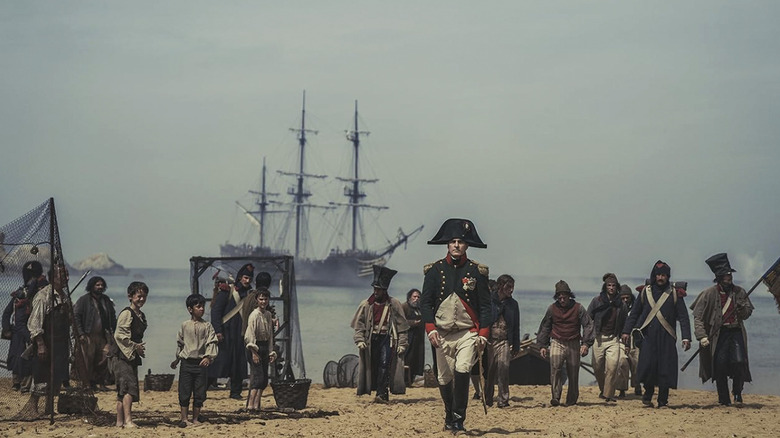
Decade later, of course, Ridley Scott submitted his take on the man with 2023’s “Napoleon,” but even the 205-minute director’s cut felt like a simplistic character sketch. I can’t imagine Kubrick would’ve been impressed, but he also disliked Abel Gance’s 1927 silent classic “Napoleon.” For Kubrick, only his richly imagined and researched version would do.
Kubrick is dead, but Napoleon may yet live
 Warner Bros.
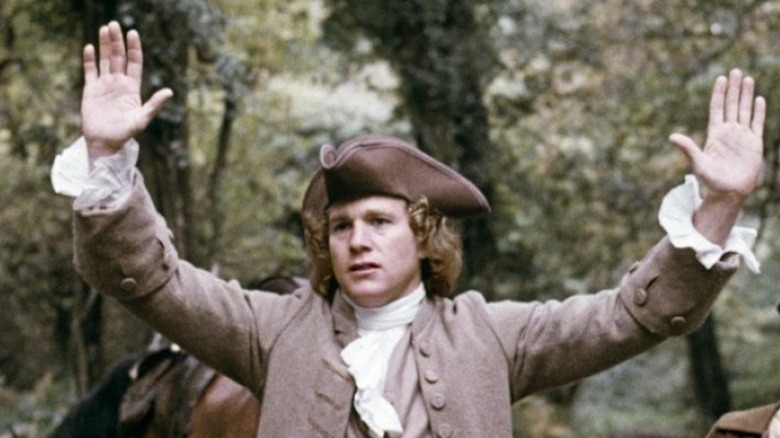
 Kubrick never returned to “Napoleon,” but the “available light” approach and use of high-speed lenses that he’d planned to employ (which, in the words of Harlan, would’ve given the audience “a feeling as if they had watched a current affairs program”) were put to brilliant use in “Barry Lyndon.” It’s a tantalizing taste of how Kubrick’s ultimate passion project might’ve played, and a magnificent film in its own right. I think it’s his finest work.
If you want to know close to everything about Kubrick’s “Napoleon,” Taschen published a detail-laden coffee table book titled “Stanley Kubrick’s ‘Napoleon’: The Greatest Movie Never Made.” If you’re a Kubrick nut, it’s worth it — not only as a document of a frustratingly unrealized masterpiece, but as a microscopic insight into the director’s creative process. There’s enough there to fire your dreams.
Indeed, Steven Spielberg believes there’s enough there all told to mount a miniseries rendition of Kubrick’s vision. He tapped Cary Joji Fukunaga to direct a six-hour adaptation, and according to the filmmaker in 2021, all of the scripts have been completed. There’s been no news on the project in a few years, but considering Spielberg’s friendship with Kubrick and relationship with his estate, it’s always felt like a priority to him.
Alas, we’ll just have to wait, wonder, and hope that Scott’s “Napoleon” didn’t “Waterloo” Kubrick a second time. As Harlan told the BBC, it would be the quintessential Kubrick epic: “Self-destructive actions by intelligent people, the poison of jealousy and revenge, the ways that brilliance, success and power can go hand in hand with egocentricity, vanity and the abuse of such power… these were the themes that always interested him.”